I’ve spent enough time around dogs to realize that they rarely react out of nowhere. Looking back, I can think of so many moments when a dog was quietly trying to say, “I’m uncomfortable,” long before barking or growling ever happened. A quick lip lick, a yawn that didn’t match the moment, or a sudden interest in sniffing the grass seemed harmless at first. Once I started paying attention, those little behaviors made much more sense.
I’ve also learned that understanding a dog’s emotions isn’t about memorizing a list of signals. It’s about noticing the whole picture. Dogs communicate through their body long before they reach a breaking point, and recognizing those early messages can make everyday situations less stressful for both the dog and the people around them.
Why Dogs Show Stress Before They React

Dogs don’t wake up one day and decide to growl or snap. Stress usually builds in stages. Early signals are their way of asking for space, slowing down an interaction, or expressing uncertainty.
When those quiet signals go unnoticed, the behavior often becomes more obvious. That’s why recognizing stress early is one of the most valuable skills any dog owner can develop. It helps prevent misunderstandings and creates a stronger relationship built on trust rather than correction.
If you’re already learning about understanding dog body language, stress signals become much easier to recognize because every movement starts to fit into a larger conversation your dog is trying to have.
The Quiet Signals Most Owners Miss
The earliest signs of stress are often so subtle that they’re mistaken for normal behavior.
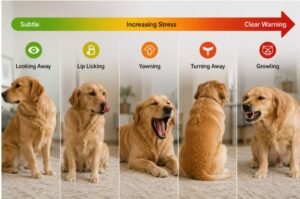
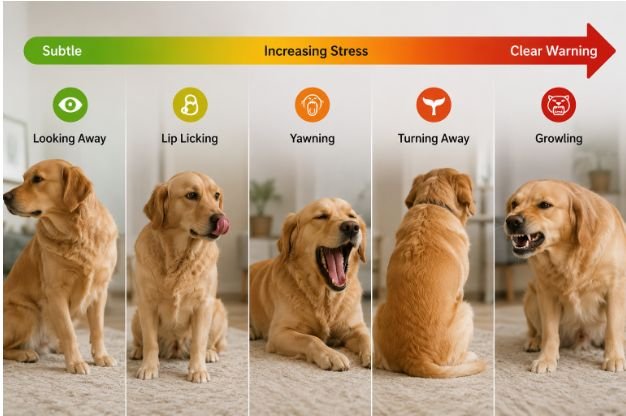
Lip Licking and Yawning
A dog that licks its lips without food nearby or yawns during a training session isn’t necessarily tired or hungry. These behaviors often help the dog cope with mild discomfort or uncertainty.
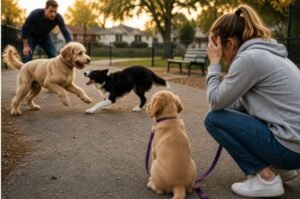
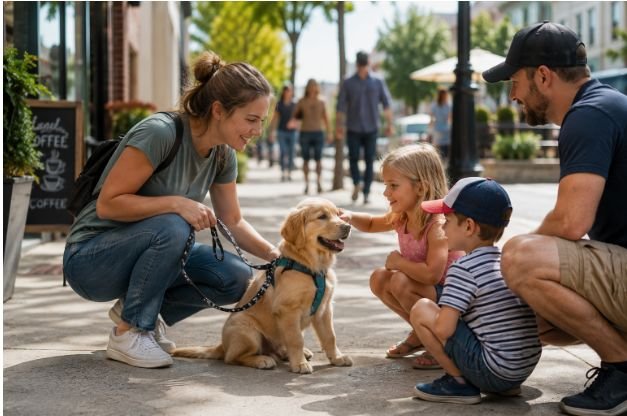
You might notice them when meeting unfamiliar people, visiting a busy park, or hearing unexpected noises around the house.
Turning Away or Suddenly Sniffing

Some dogs avoid uncomfortable situations by turning their head away or dropping their nose to the ground as if something suddenly became interesting.
These actions aren’t signs of stubbornness. They’re polite ways of avoiding conflict while giving themselves a chance to feel safe again.
Ignoring these early cues can unintentionally increase pressure on the dog.
When Stress Starts to Build
As anxiety grows, body language becomes easier to spot.
Whale Eye and Excessive Panting
One of the clearest signals is “whale eye,” where the whites of the eyes become visible because the dog turns its head while keeping its attention on whatever is causing concern.
Panting can also become excessive even when the weather is cool, and the dog hasn’t been exercising. Combined with other signals, it often suggests emotional stress rather than physical exertion.
Stiff Body Language
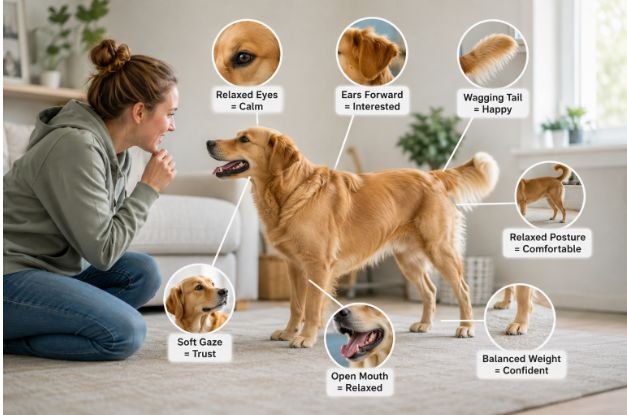
A relaxed dog moves naturally. A stressed dog often becomes noticeably rigid.
You may see frozen movement, pinned-back ears, a tucked tail, or muscles that suddenly tense. Some dogs will even hide behind furniture or move behind their owner when they feel overwhelmed.
These behaviors shouldn’t be ignored because they often appear before more serious warnings.
Clear Warnings Mean the Dog Needs Space

When subtle communication doesn’t work, dogs become more direct.
A hard stare, raised hackles, growling, snapping, or lunging are usually not the beginning of the problem. They’re often the final stage after earlier signals have gone unnoticed.
Growling deserves special attention because it’s a valuable warning, not bad behavior that should automatically be punished. A dog that growls is communicating discomfort before feeling forced to defend itself.
Responding calmly by creating distance from the trigger is usually much safer than trying to force the interaction to continue.
What Commonly Triggers Stress in Dogs
Every dog has different comfort levels, but certain situations appear repeatedly.
- Meeting unfamiliar people or dogs too quickly.
- Loud household noises like fireworks, storms, or construction.
- Busy parks and crowded public places.
- Veterinary appointments and grooming visits.
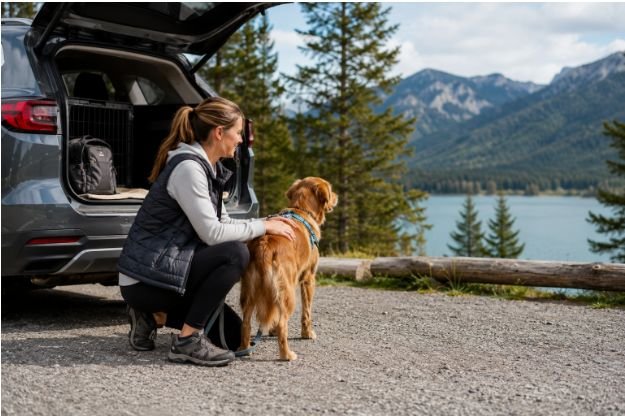
- Car rides for dogs that haven’t been gradually introduced to travel.
- Sudden routine changes or moving into a new home.
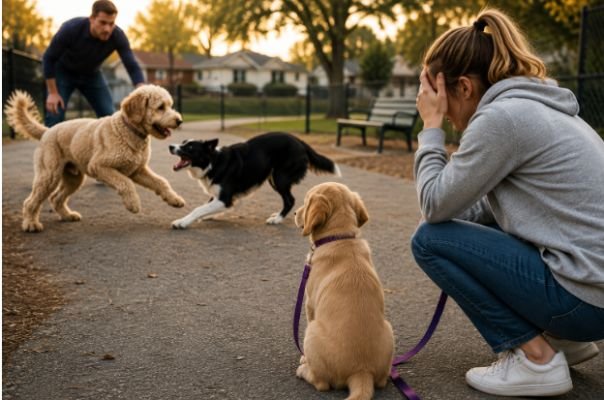
Sometimes one stressful event isn’t enough to cause a reaction. Instead, several small stressors build throughout the day before the dog reaches its limit. Many behavior professionals refer to this as trigger stacking, which explains why a calm dog can suddenly appear reactive after multiple uncomfortable experiences.
How to Help a Stressed Dog Feel Safe

Helping an anxious dog usually starts with observation rather than action.
Instead of correcting the behavior, try identifying what changed in the environment. Give your dog more distance from the trigger whenever possible and allow time to relax before asking for more interaction.
Positive reinforcement also plays an important role. Reward calm behavior, create predictable routines, and introduce new experiences gradually instead of expecting immediate confidence.
Regular exercise, mental enrichment, quality sleep, and consistent daily routines all contribute to emotional well-being over time.
Why Reading Stress Signals Changes Everything
Many behavioral problems begin with communication that people simply didn’t recognize. Once owners start paying attention to early signals instead of waiting for obvious reactions, everyday interactions become much smoother.
Understanding stress isn’t about becoming worried every time your dog yawns or looks away. It’s about noticing patterns, respecting boundaries, and responding before anxiety has a chance to grow. That awareness builds trust, improves training, and helps dogs feel more secure in the people they depend on every day.
FAQs: From Subtle Cues to Clear Warnings: Understanding Dog Stress Signals
Can dogs show stress without barking or growling?
Yes. Most dogs begin with subtle behaviors like lip licking, yawning, turning away, or avoiding eye contact before using louder warning signals.
Is panting always a sign of stress?
No. Dogs pant to cool down after activity, but excessive panting in a calm environment may indicate stress, anxiety, or discomfort.
Should I correct my dog for growling?
Generally, no. Growling is a warning that your dog feels uneasy. Understanding the cause and creating space is usually a better response than punishment.
When should I seek professional help?
If stress signals happen frequently, become more intense, or lead to aggressive behavior, consult your veterinarian or a qualified dog behavior professional.
The Best Conversations Often Happen Without Words
The strongest bond with a dog doesn’t come from teaching the most commands. It grows from learning to notice the quiet moments that most people overlook. A glance away, a stiff posture, or a simple yawn can say far more than barking ever will. When those signals are respected, dogs feel safer, trust grows naturally, and many behavioral challenges become easier to prevent before they start.
Sometimes the smallest behaviors are the ones worth paying attention to the most.